
Video Production · Content Strategy · Motion Graphics · Post-Production
Published August 2022 · Analytics: August 12, 2022 – May 4, 2026
Overview
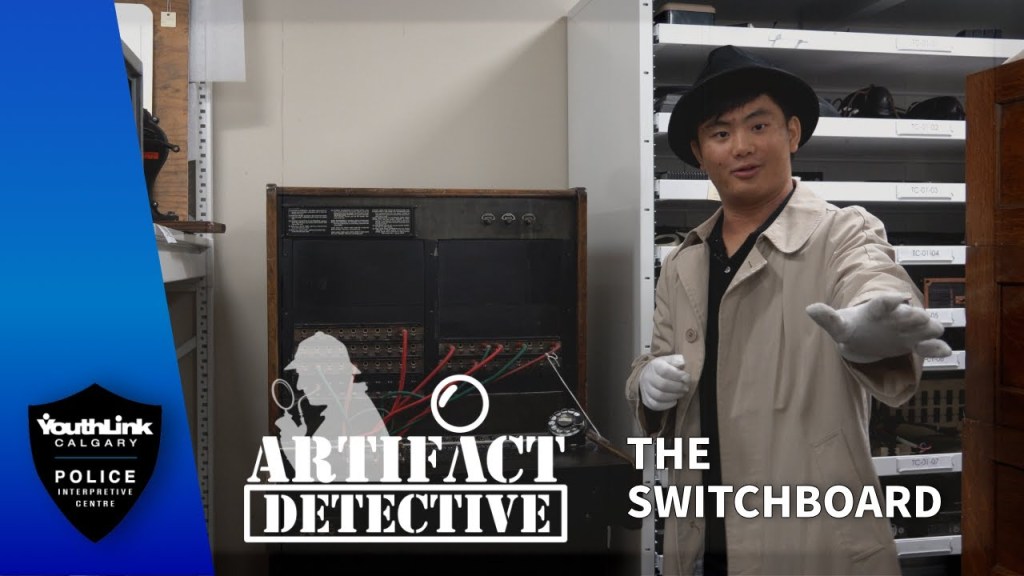
In 2022, I conceived, produced, wrote, directed, edited, and performed in a short-form educational video for YouthLink Calgary’s YouTube channel. The result — Artifact Detective: The Switchboard — has accumulated 209 views and 3,000 impressions over nearly four years, driven entirely by organic reach with zero paid promotion. It holds a 100% like ratio, earns views to this day, and continues to be shown in classroom settings within the Calgary Police Discovery Centre building.
The Brief
YouthLink Calgary (now the Calgary Police Discovery Centre) wanted to revisit a dormant content series in which museum staff showcased historical artifacts from the police collection. Rather than a full series revival, this was scoped as a one-off opportunity: a single video that demonstrated what high-quality, personality-driven educational content could look like on the organization’s channel.
I needed the video to do three things:
- Educate — rooted in genuine historical and scientific content about the telephone switchboard
- Engage — entertaining enough to hold attention across a general public audience, including younger viewers
- Work within constraints — produced on a small finite budget, with limited crew support
I identified the concept, secured managerial approval, and proposed a budget for props and a period costume before a single frame was shot. The full project — from initial pitch through to publishing — was completed over the course of one month in 2022.
My Role
This was an end-to-end solo production. From first pitch to final upload, I owned every stage of the process:
- Concept development and pitch
- Budget proposal and approval
- Scriptwriting (through multiple drafts)
- Production design and prop sourcing
- Directing and cinematography
- On-camera performance as both “the Detective” and myself
- Post-production: editing, colour, sound mix
- Motion graphics: all titles, transitions, and visual effects
- YouTube channel publishing and social promotion
One coworker assisted with minor practical on-set gimmicks — throwing props on cue, operating a handheld camera for walk-and-talk moments. Every creative decision and deliverable was mine.
Skills applied: Screenwriting · Green screen compositing · Archival footage integration · Motion graphics & kinetic typography · On-camera performance · Dual-character editing · YouTube channel management · Social content promotion
The Approach
Audience & Distribution
I targeted a broad public audience — anyone curious about the history of communication technology. Rather than narrowing to a single demographic, my goal was content that could work across age groups: substantive enough for adults, energetic and comedic enough to hold a younger viewer’s attention.
I planned distribution from the start: primary hosting on YouTube, with social promotion through LinkedIn and Instagram. As the analytics later confirmed, this was the right call — LinkedIn became the single largest external traffic driver, reaching the civic professionals, educators, and community stakeholders who make up much of the organization’s online network.
Creative & Production Decisions
Dual-character performance through editing
I had the “Detective” character interact directly with “myself” — two versions of the same person sharing the screen through carefully planned cuts. This required precise blocking, consistent eye-line matching across setups, and deliberate pacing in the edit. The result is a conversational dynamic that gives the video a back-and-forth energy without requiring a second on-camera performer.
Green screen and archival footage compositing
Rather than cutting away to historical footage as separate inserts, I used green screen to composite the Detective character directly into archival scenes — placing him inside the old footage as a single visual composition. This kept the storytelling immersive and grounded the character in the historical world being discussed.
Full motion graphics stack
I designed a suite of original graphic elements: a kinetic text intro and series logo, a phone hologram graphic, a VHS damage effect applied to archival footage, an animated avatar sequence, and custom transitions throughout. I built each element to serve a narrative function — reinforcing the shift between past and present that the video’s concept is built around.
Script development
I took the script through multiple rewrites before production began. In the final version, I deliberately used plain, casual language — keeping complex technical concepts (analog signal routing, manual telephone exchanges) accessible without oversimplifying them. I structured the narrative around a clean arc: what was the switchboard, how did it work, and how does that connect to modern technology?
The Results – How Did I Do?
All data sourced directly from YouTube Studio analytics. Period: August 12, 2022 – May 4, 2026.
- Total Views — 209
- Unique Viewers — 174
- Total Impressions — 3,000
- Impressions Click-Through Rate — 2.2%
- Total Watch Time — 4.9 hours
- Average View Duration — 1:24 (27% of 5:14)
- Like Ratio — 100% Channel average: 95.8%
- Subscribers Gained — +3
- External Traffic Share — 47.9%
- YouTube-Recommended Traffic — 41.3% of impressions
What Does This All Mean?
LinkedIn drove the video
External traffic accounted for 47.9% of all views. Within that, LinkedIn (desktop + Android) combined for 42% of external referrals — making it the dominant inbound source by a wide margin, with Instagram contributing an additional 21%. My decision to promote through LinkedIn specifically reached the civic professionals, educators, and institutional stakeholders who form the core of the organization’s online community.
YouTube’s algorithm picked it up independently
Beyond the social push, 41.3% of all impressions came from YouTube recommending the video — not from subscribers, not from external promotion. For a small org channel with no advertising spend, earning that level of algorithmic endorsement means the video’s metadata, engagement signals, and content quality were working together effectively.
An evergreen view pattern
The view curve shows consistent, sustained engagement across the full 1,362-day lifetime of the video — with views still arriving as recently as May 2026. This isn’t a content spike that burned out. It’s a slow-burn performer that continues to attract new viewers nearly four years after publishing.
The audience is almost entirely new
93.9% of watch time comes from non-subscribers. The video functions as a genuine discovery vehicle — pulling in audiences with no prior relationship with the organization, not just rewarding existing followers.
Perfect sentiment
A 100% like ratio — against a channel average of 95.8% — means every viewer who chose to engage with the video responded positively. No dislikes across the entire lifetime of the content.
A note on retention
The 27% average view duration (1:24 on a 5:14 video) is the one metric worth being honest about. YouTube benchmarks for educational long-form content typically sit around 30–40% for established channels, so this video falls slightly below that range. Contributing factors include the lack of a built-in subscriber audience and the absence of an end screen retention strategy. Going forward, I’d approach viewer retention more intentionally from the scripting phase — front-loading a stronger hook and structuring the narrative around sharper act breaks.
Wrap Up
Looking back at this project with the benefit of four years of data and a clearer marketing lens, a few things stand out as genuinely instructive.
My content strategy was sound, even if I didn’t frame it that way at the time. I built the video to attract a curious general audience, engage them through a character-driven comedic format, and deliver a satisfying educational payoff. That structure maps directly to how effective content marketing works — and the evergreen view pattern and consistent algorithmic surfacing suggest the underlying strategy was solid.
Having end-to-end creative ownership gave me real advantages but also real tradeoffs. Owning every stage meant fast decisions and consistent creative vision, but fewer outside perspectives on the script and no one flagging viewer experience considerations like end screen strategy during post. In a professional content team context, those conversations happen naturally across roles.
I’d make measurement part of the plan from day one. I didn’t have access to the YouTube analytics during production or the initial distribution phase, which meant decisions were made on craft instinct rather than data-informed iteration. Defining success metrics before publishing — not after the fact — is something I’d approach differently going forward.
Watch the Video
I’m a videographer and content strategist based in Calgary, Alberta. Connect with me on LinkedIn.
 Ryan Yip's Showcase